A dash cam is the one car accessory bought for a day you hope never comes. When it does come — a disputed accident on Shahrah-e-Faisal, a motorway near-miss, a false claim at a signal — the camera either captured readable footage or it captured expensive disappointment. This guide explains the seven things that decide which one you get, in the order they matter, with Pakistani roads, heat and prices in mind.
1. Resolution and the number-plate test
The only resolution question that matters: can the camera read a number plate at one car length, at night, in motion? Genuine 1080p (Full HD) from a real sensor passes this test in city driving. Many cheap "4K" and "1080p" listings in Pakistan are interpolated — the file says 1080p but the sensor is far weaker, and plates blur into smears. Above genuine 1080p, returns shrink fast for Pakistani use: 1440p and 4K help in daylight but cost two to three times more (Rs 12,000–20,000) and fill memory cards four times faster.
Rule: buy honest 1080p from a seller who publishes the sensor and sample specifications, in the Rs 5,500–7,000 band, before buying impressive numbers from a seller who publishes neither.
2. Night vision — where cheap dash cams fail
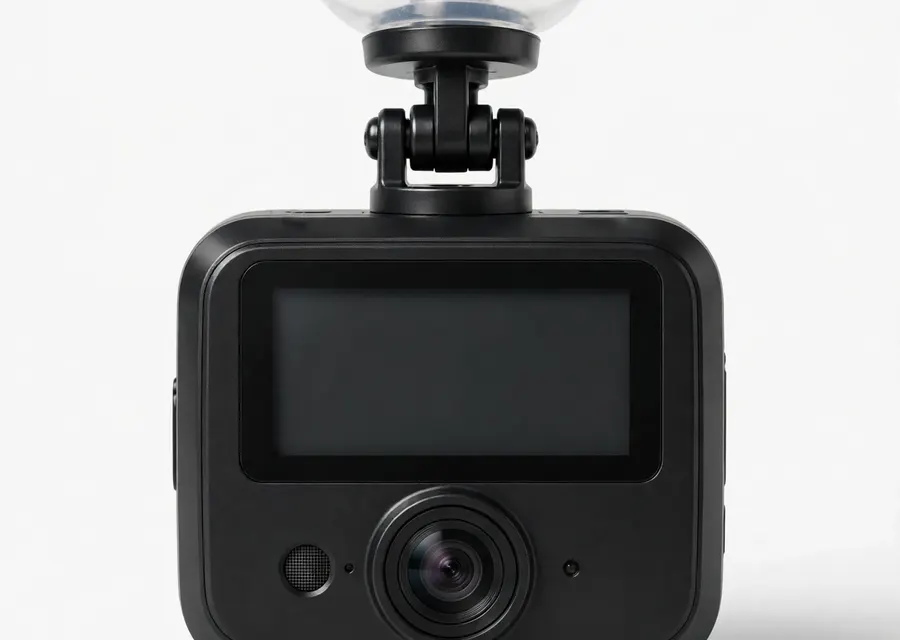
Half of serious driving incidents in Pakistan happen after dark, on roads where lighting ranges from motorway black to bazaar glare. Night performance comes from sensor sensitivity and lens aperture, not from the words "night vision" on a box. Infrared LEDs inside the car are a gimmick (they reflect off the windscreen). Look for a wide aperture (f/1.8 or wider) and WDR (wide dynamic range), which keeps plates readable when headlights flare. Our HD dash cam is built to exactly this specification because it is the specification that matters here.
Prices and picks in this guide are based on Pakistani market research, November 10, 2026.
3. Loop recording and the G-sensor — the two non-negotiables
Loop recording overwrites the oldest footage when the card fills, so the camera never stops with a "memory full" message on the one drive that matters. Any dash cam without it is disqualified, full stop.
The G-sensor detects a sudden impact and locks that clip so looping cannot erase it. Check that sensitivity is adjustable: Pakistani speed breakers can trigger a too-sensitive sensor, filling the card with locked clips of speed bumps. Medium sensitivity is the correct setting for our roads.
4. Memory cards — the hidden half of the purchase
Most dash cams in Pakistan are sold without a card, and the card decides your recording history. Use a Class 10 (or U1/U3) microSD from a genuine seller — counterfeit cards corrupt footage silently. At 1080p: 32 GB holds about 4–5 hours of driving, 64 GB about 9–10 hours. For a daily commuter, 32 GB with looping is plenty; for long intercity runs, take 64 GB. Format the card in the camera once a month to keep the file system healthy in our heat.
5. Mounting, power and heat
A suction mount behind the rear-view mirror keeps the camera out of your sightline and is removable; adhesive mounts hold better in extreme heat but are permanent. Pakistani summers test both — if a suction cup keeps falling in June, a small adhesive pad under it is the standard fix. Power comes from the 12V socket with a long cable routed along the headliner; no wiring is cut. Leave a loop of slack: sockets and cables expand in heat. Parking surveillance while the engine is off needs either the camera's small internal battery (impact-wake clips only) or a hardwire kit — decide before buying if parked recording is your main reason.
6. What to pay — and what the extra money buys
| Band | Price (Rs) | What you actually get |
|---|---|---|
| Too cheap | Under 4,000 | Interpolated resolution, poor nights, unreliable in heat |
| Sweet spot | 5,500 – 7,000 | Genuine 1080p, night-capable sensor, loop + G-sensor, LCD screen |
| Premium | 12,000 – 20,000 | 4K, Wi-Fi app, GPS, brand warranty — luxuries, not necessities |
For the full market picture across all accessories, see the 2026 price guide.
7. Fitting checklist (15 minutes, no tools)
- Clean the windscreen inside, top centre, behind the mirror.
- Mount the camera, power it, and set date/time correctly — timestamps are evidence.
- Angle the lens so the horizon sits in the middle-upper frame and the bonnet edge just shows at the bottom.
- Route the cable along the headliner and A-pillar trim to the socket; keep it clear of airbag covers on the pillar.
- Insert the card, format it in the camera, record a two-minute test drive and play it back before trusting it.
Questions the guide did not answer? The dash cam product page carries the full specification and buyer FAQs, and our team answers fit questions for specific car models on WhatsApp.
Dash cams for ride-hailing and business cars
Drivers for ride-hailing services and companies running small fleets buy dash cams for a second reason: the camera protects them from claims by passengers and other drivers alike. For all-day professional use, three adjustments to this guide apply. Storage: take the 64 GB card — a ten-hour shift at 1080p loops through 32 GB before the day ends. Placement: mount the camera to record the road ahead as usual; interior-facing second cameras exist but raise passenger-privacy questions that most drivers in Pakistan prefer to avoid — the road camera alone resolves the common disputes (accidents, false route claims are handled by the app). Heat discipline: a car parked in sun between rides cooks its camera; a suction mount lets you pop the unit into the glove box on long parked breaks, which doubles its realistic life in our climate. Fleet buyers fitting several cars should standardise on one model and one card size — mixed fleets of cameras are how footage goes missing.
Common dash cam problems in Pakistan — and the five-minute fixes
"It stopped recording." Almost always the card: counterfeit or worn-out microSD. Replace with a genuine Class 10 card and format it in the camera. "Footage is blurry at night." Usually a dirty windscreen inside (a film builds up invisibly) or protective plastic still on the lens — both happen more than sensor failure. "It falls off in summer." Suction cups soften in heat; clean the glass, re-wet the cup, or add the adhesive-pad fix described in the mounting section. "Locked files fill the card." G-sensor sensitivity is set too high for our speed breakers — set it to medium or low. "Wrong date on videos." Reset after any full battery drain and check monthly; a wrong timestamp weakens footage exactly when it matters. None of these need a repair shop — which is the point of buying a mainstream model with published guidance instead of a sealed mystery box.
Front-only or front-and-rear (dual channel)?
Dual-channel dash cams add a second camera for the rear window, at roughly 1.5–2× the price of the front-only equivalent. In Pakistan their value is specific: rear-end collisions in stop-go city traffic are common, and a rear camera settles the "you reversed into me" argument instantly. Highway and intercity drivers gain less — their incidents are overwhelmingly frontal. The costs are real beyond price: double the footage filling the same card (take 64 GB minimum), a long cable run through the cabin that must avoid curtain-airbag paths, and a rear camera whose view dies behind dark aftermarket tint film. Verdict: city taxi, ride-hailing and family cars that live in dense traffic — dual channel earns its premium. Everyone else — a strong front camera, correctly fitted, is the better buy, and the saved money funds the inflator and mirrors that protect you in ways cameras cannot.
Settings cheat-sheet for Pakistani roads
Out of the box, most dash cams ship with settings tuned for somewhere else. Change these five on day one. Resolution: the camera's true maximum (1080p here) — never an interpolated higher mode. Loop length: 3-minute clips; shorter clips make finding and sharing one incident painful, longer clips risk losing more in one corrupt file. G-sensor: medium or low — high sensitivity plus Pakistani speed breakers equals a card full of locked bump footage. Exposure/WDR: WDR on, always; it is the setting that keeps number plates readable against headlight glare and bazaar brightness. Date and time: correct, and rechecked monthly — footage arguing a dispute needs a trustworthy timestamp. Bonus habits: format the card in-camera monthly, carry the removed card's footage off before any service-station visit, and clean the inside of the windscreen where the lens looks through it — the cheapest image-quality upgrade in this entire guide is a microfibre cloth.
Prices in this guide come from Pakistani market research carried out in November 2026 (Daraz best-seller listings, dedicated accessory stores and wholesale marketplaces). Market prices move with sales and stock; the ranges here are a fair-buying guide, not a quote.